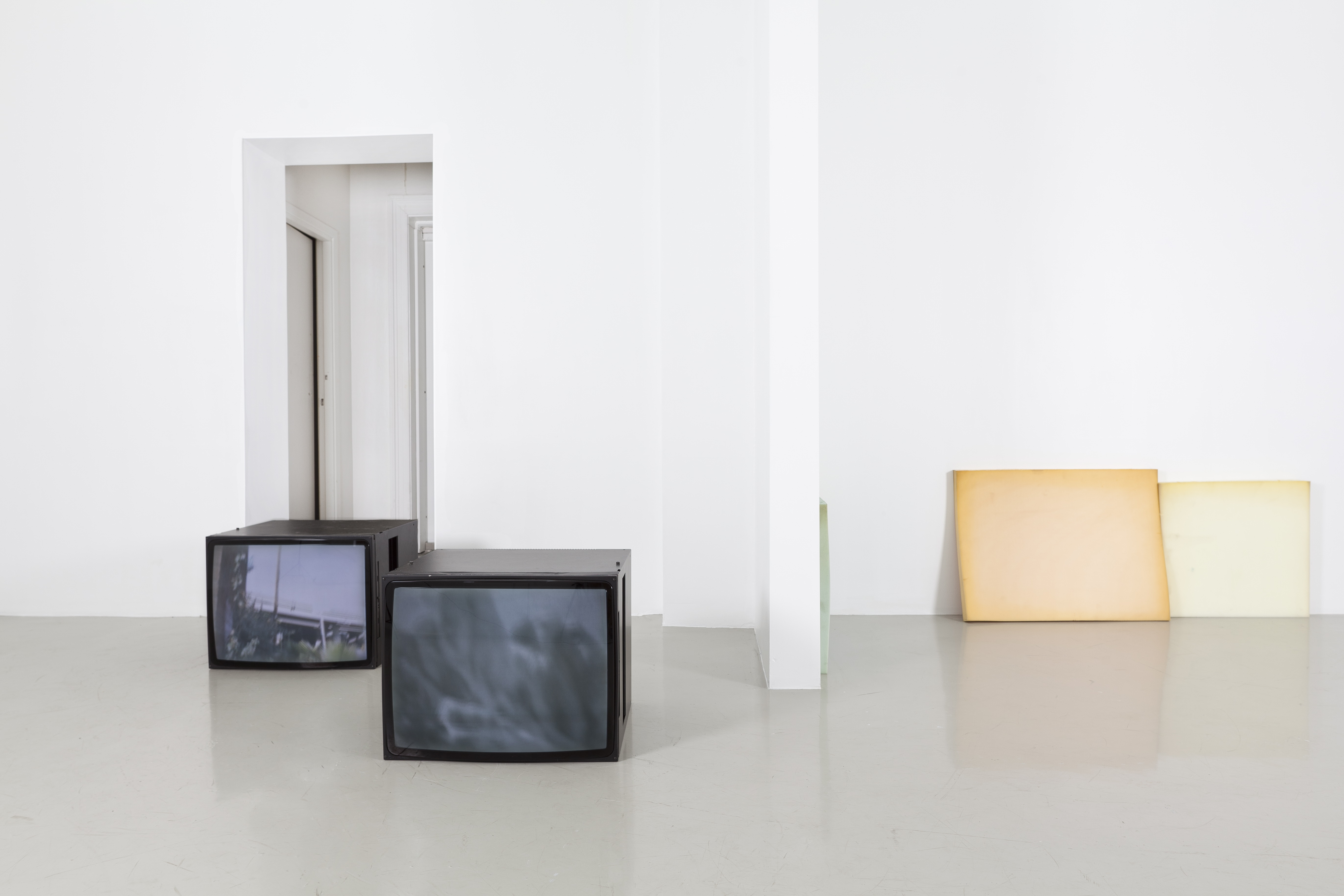
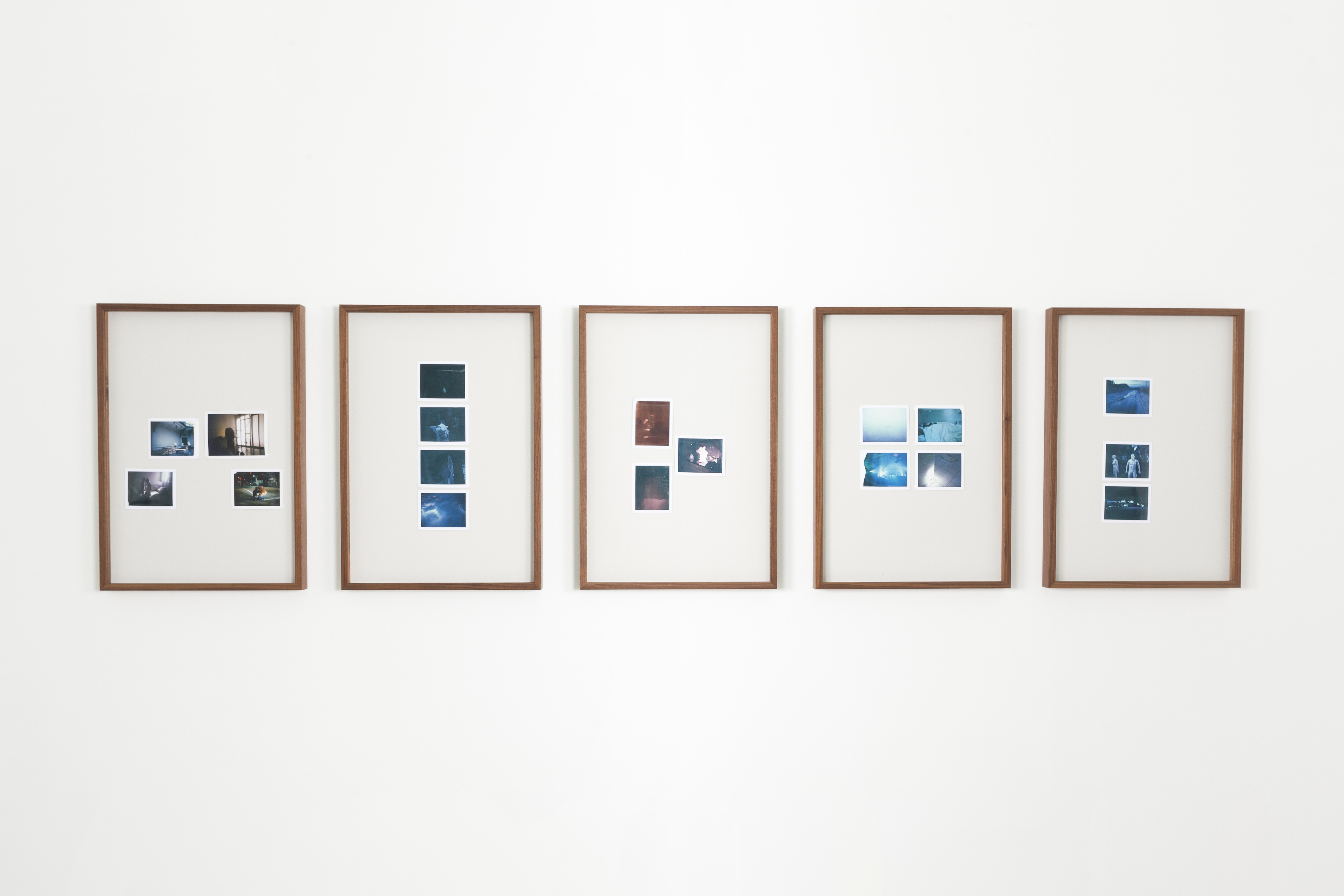
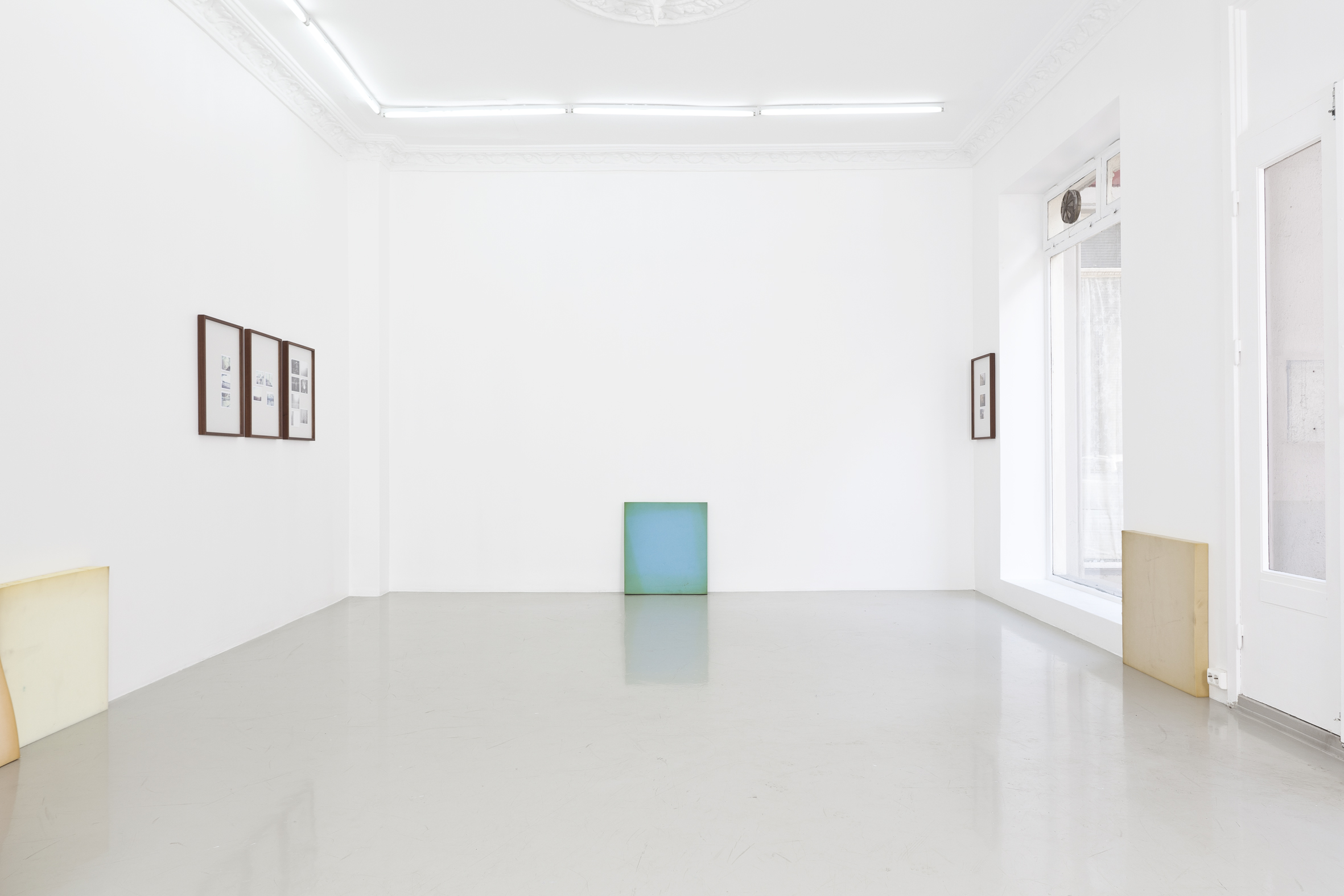
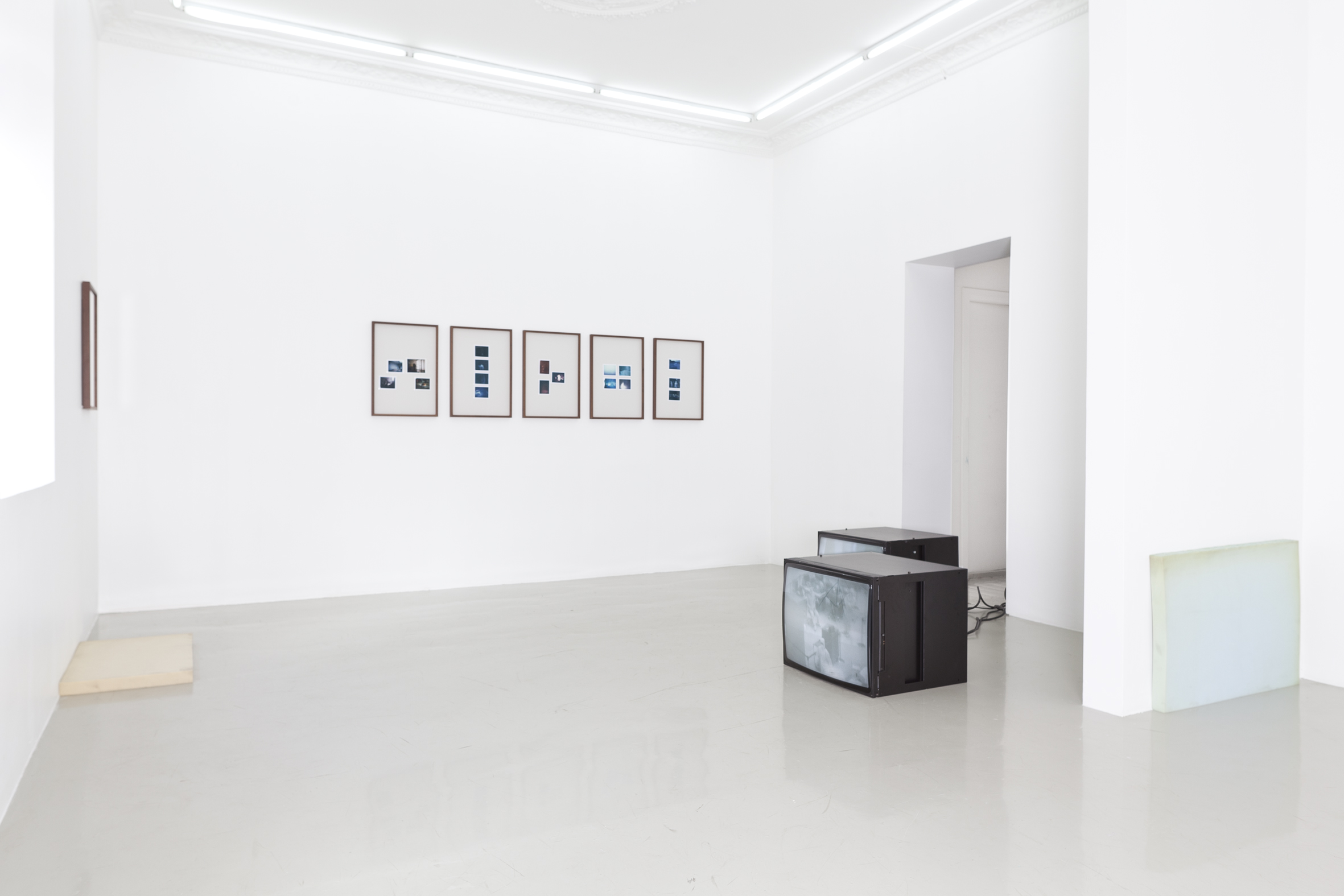
In one of the photographs we see a row of white barracks and a crane hovering over them. Like most of the pictures this one is also out of focus, but we know it’s LA and it doesn’t take an exceptional stretch of the imagination to conclude that what we see here is a film set, and the hovering crane is for aerial shots – a prosthetic device of the film industry. In the context of film and photography the prosthetic would be whatever gives increased agility and reach to the act of capturing your surroundings. But the reliance on prosthetic aids also entail a transposing of agency onto the device that is being used. You merge with it so to speak, your relation to your surroundings become premised on the inhibitions as well as the empowerment that the instrument grants you. Your elongated reach is made possible through a medium that is posited in between you and what you reach for. Any tool or object you employ to extend your natural abilities would fall into this expanded category of prosthetics, making it a very pliable concept. It’s only indirectly recognized - by its curtailment of sensory relations to the outside, by how it circumscribes and governs your access to the world.
All though largely inconsistent in terms of visual subject matter, the few out of the thirty or so photographs on show that frame and focus on an object or a figure, tie loosely to an abstract notion of the prosthetic: the film set, a man in a wheelchair, a limp hand dangling from an open car window, a dog wearing a sweater, a blended out human figure behind a bar, a naked man with his back turned to us, a statue of a woman and a curled up rope-like structure on a stairwell. Together they comprise a kind of poetic mapping of reliance and absence, of possible extensions and diffused subjectivity.
The camera has become a semi-automated surrogate for cognitive processing, that by way of imperfection, inscribes a quasi-subjectivity on the observed – acting as a proxy for the absent decision maker, who has all but completely limited her influence to the repetitive triggering that animates the polaroid camera and makes it go: – clackbrrrrrrrrr, clackbrrrrrrrrr, clackbrrrrrrr. This transference of authorship onto the camera addresses the vulnerable connection between perceiving subject and sense-impression by letting the phenomenological traces of the photographic process inscribe itself on the photographic traces of the observed as a veil of technical flaws.
—
Stian Gabrielsen